When has a multi-site business outgrown GoHighLevel? Build beside it, not instead of it
The signs a multi-location service business has hit GoHighLevel's limits, and why the answer is an operations layer beside it, not a switch to another CRM.


GoHighLevel is the right core for most multi-location service businesses. We build on it and we recommend it. This post is about the point where it stops being enough, which is a different point from the one the "GoHighLevel alternatives" articles describe.
Those articles want you to switch. Our experience is that switching is usually the wrong move. The right move is to keep GoHighLevel for what it is good at and build the piece it is not designed to be, beside it.
The signs you have outgrown it
The pattern shows up between roughly five and thirty locations, or when the business starts treating its operational data as something it needs to query rather than something it needs to message.
You need data out faster than the API allows. GoHighLevel's API has rate limits that are fine for a marketing workflow and painful for an operations system that wants to sync every job, every technician and every invoice. On a public discussion thread, a CTO serving a 100-plus-person client described hitting those limits as the first wall.
Permissions are all or nothing. Users who can read a record can usually change it. When you have a finance person who needs to see everything and touch nothing, or franchisees who must see only their own locations, the permission model runs out.
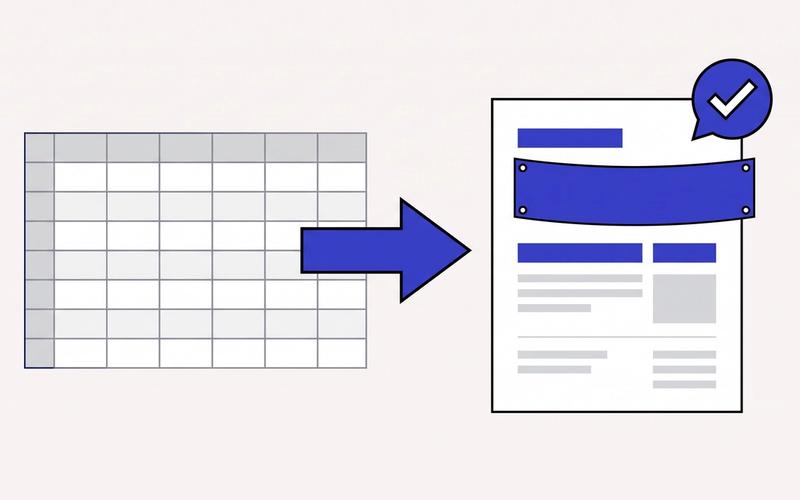
Reporting across locations is a spreadsheet again. Per-location dashboards are fine. "Which locations are below target on rebookings this month, and why" means exporting and joining.
Your process has objects GoHighLevel doesn't. Jobs, visits, work orders, contractor invoices, equipment. You end up stuffing them into custom fields on contacts and opportunities, and the data model fights you.
Someone has built a parallel system. A Google Sheet that is really the operations database. A Zapier account with forty zaps nobody fully understands. That is the business telling you where the real system should be.
If two or more of these are true, the question is not which CRM to switch to.
What to build beside it
Keep GoHighLevel as the front office: lead capture, pipelines, messaging, reviews, reminders, the things it does well and your staff already know. Build an operations layer next to it that owns the data GoHighLevel was never meant to own.
Your own database for your own objects. Jobs, visits, technicians, contractors, invoices, equipment, locations. Modelled the way your business thinks about them, not the way a CRM thinks about contacts.
A sync, not a migration. Contacts and opportunities stay in GoHighLevel and flow into the ops layer; job status and outcomes flow back. Make or n8n handle the plumbing; the rate limits stop mattering because the ops layer is doing the heavy reads and writes on its own data.
Role-based dashboards. Owner sees all locations. Location manager sees theirs. Finance sees money and nothing else. Franchisees see only what is theirs. Cross-location comparison is a query, not an export.
The hand-offs that currently need a person. Contractor invoice reconciliation against completed visits. Territory routing with a fallback if nobody picks up the lead within the SLA. Scheduling exceptions surfaced as a queue someone can actually clear.
A multi-location cleaning company we work with runs exactly this shape: GoHighLevel for the pipeline, Make for the plumbing, their booking tool for scheduling, and automation around them that tags every lead by service area, runs a seven-stage pipeline with timed escalation, and stops the moment a customer replies. The platform did not change. What sat beside it did.
What not to do
Do not rip and replace. Moving to HubSpot or Salesforce swaps one set of limits for another, costs more per seat, and loses the staff familiarity you have built. The ops problems come with you.
Do not build the ops layer inside Zapier. Forty zaps is not a system. It is a system nobody can see, and it will stop quietly. If the logic matters, it belongs in a workflow tool with error handling and a log you can read (n8n or Make), or in code.
Do not start with the dashboard. Start with the one hand-off that costs the most, usually invoices or routing, and build the data model under it. The dashboard falls out of a clean model.
What it costs and how long it takes
The first piece, one hand-off automated end to end with the data model under it, is a fixed-price pilot delivered in two to four weeks after a Process Audit. The audit is where we look at your sub-accounts, your custom fields and your zaps, and tell you which pieces should move and which should stay.
If the honest answer is that you have not outgrown GoHighLevel and a cleaner setup would fix it, we will say so. That has happened.
Where to start
Write down the three things you currently do in a spreadsheet because GoHighLevel can't, and the one that costs you most each month. That is the audit's agenda.